Which lift fits your budget and site?
Low Up: the low rise, lowest-cost way past a few steps.
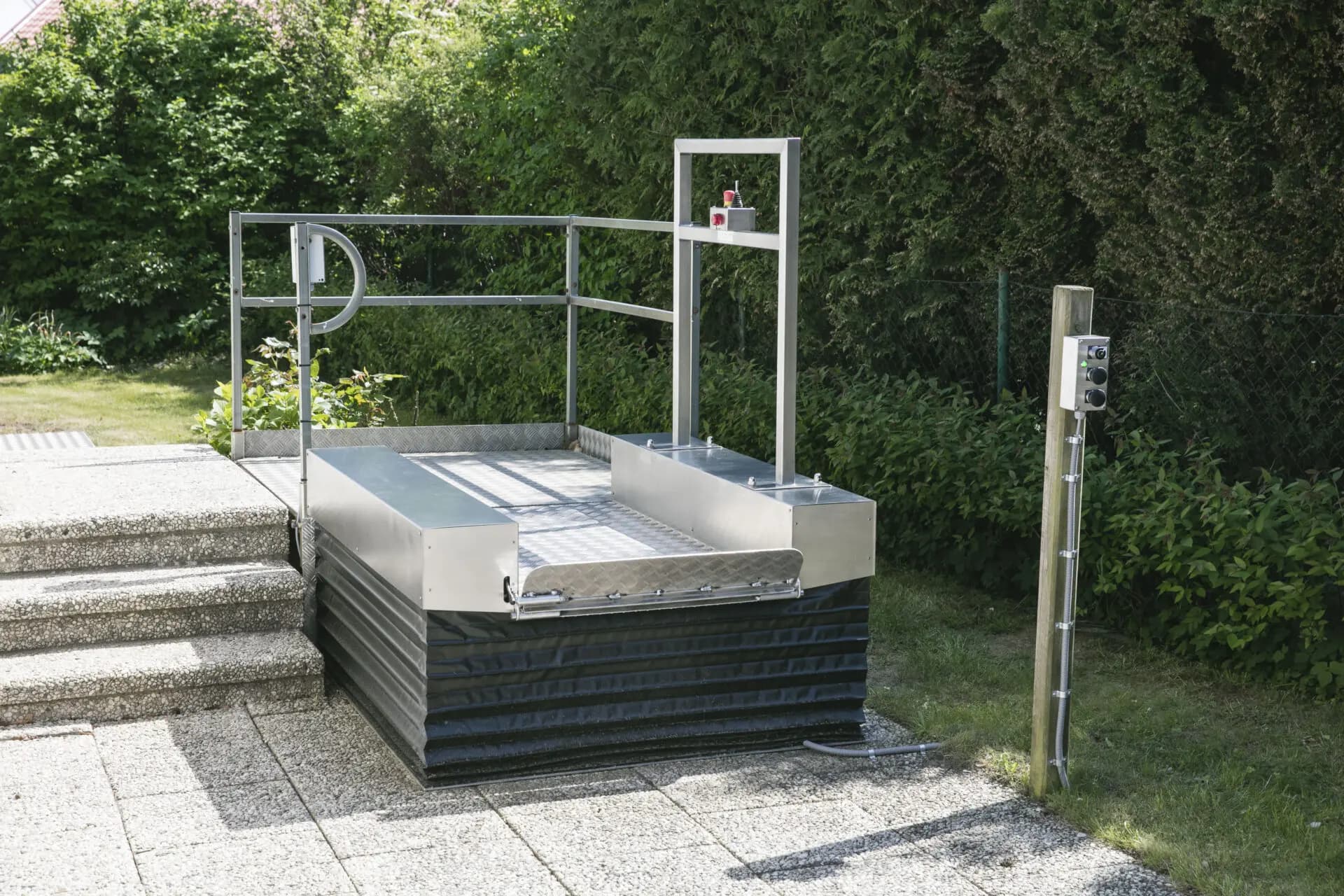
If you're pricing a home wheelchair lift cost for an entry with a few steps, start here. The Low Up is a compact, Swedish-engineered low rise platform lift, from $16,000 ex GST installed. It travels from 0 to 500 mm, carries up to 250 kg and comes with a 715 mm or 915 mm wide platform. There's no pit, just a 35 mm threshold, and it installs within a few hours with minimal changes to the existing structure, which keeps the cost down. It runs on 230 V, 10 A power, with a joystick or wireless call stations, and has emergency lowering, an emergency stop and a non-slip platform. It is certified to EN 12100:2010 and EN 60204-1:2018, with a CE declaration and Kiwa certification.
Mobilift: portable access without building works.
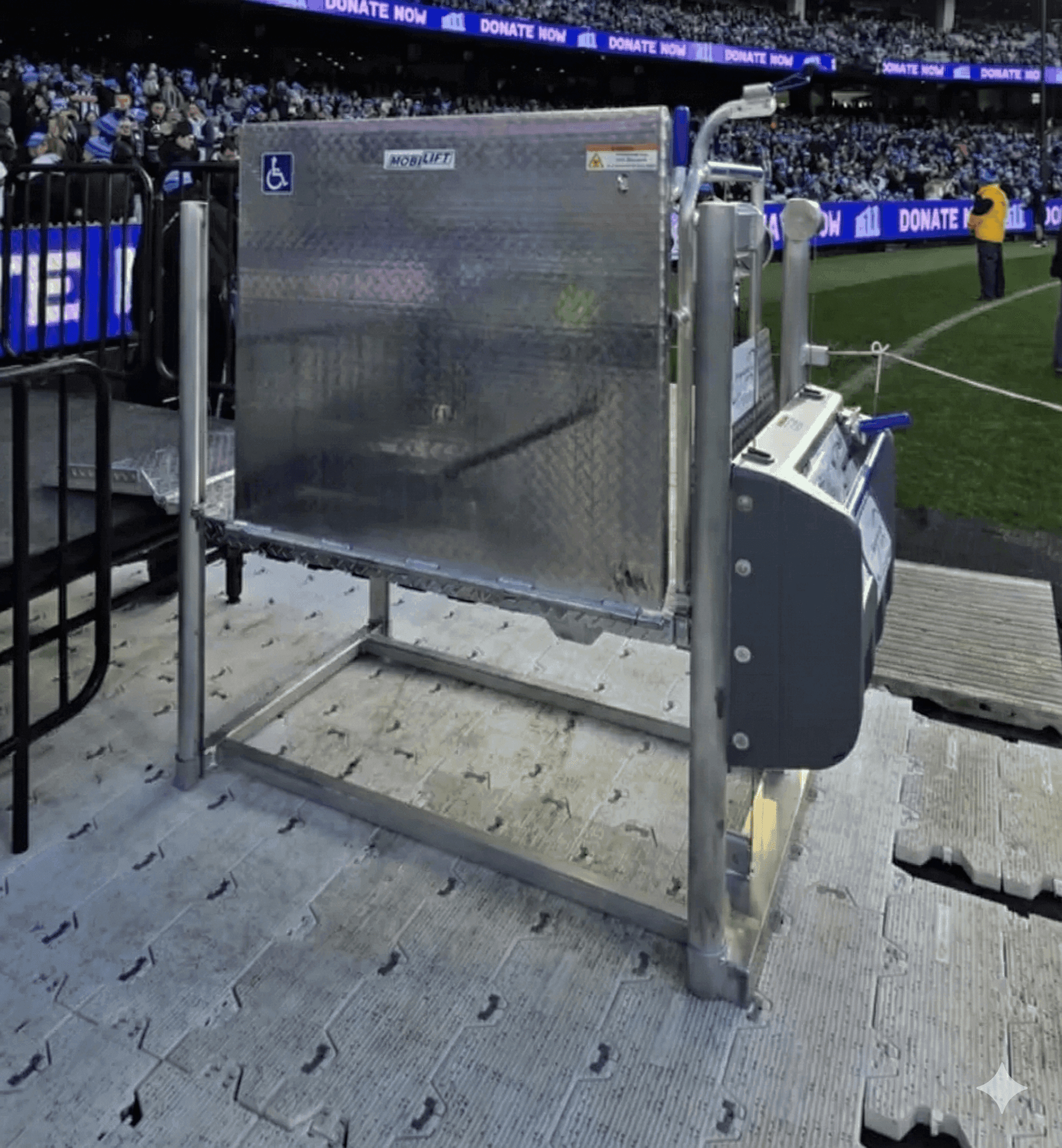
The Canadian-made Mobilift CX is a portable platform lift, from $19,000 ex GST to buy, installation included. It lifts 272 kg on an 890 x 1400 mm platform up to 1524 mm, taking about 20 seconds to reach full height on a manual crank, so it needs no power. The lift weighs 135 kg and rolls on large wheels between stages, grandstands and raised platforms, with a 510 x 815 mm bridge ramp onto the landing. Because it needs no structural changes, it suits heritage sites and venues whose access needs keep changing. It is also available to hire, short or long term, through our portable lift rental service.
Discovery: a compliant vertical lift for rises up to 2 m.
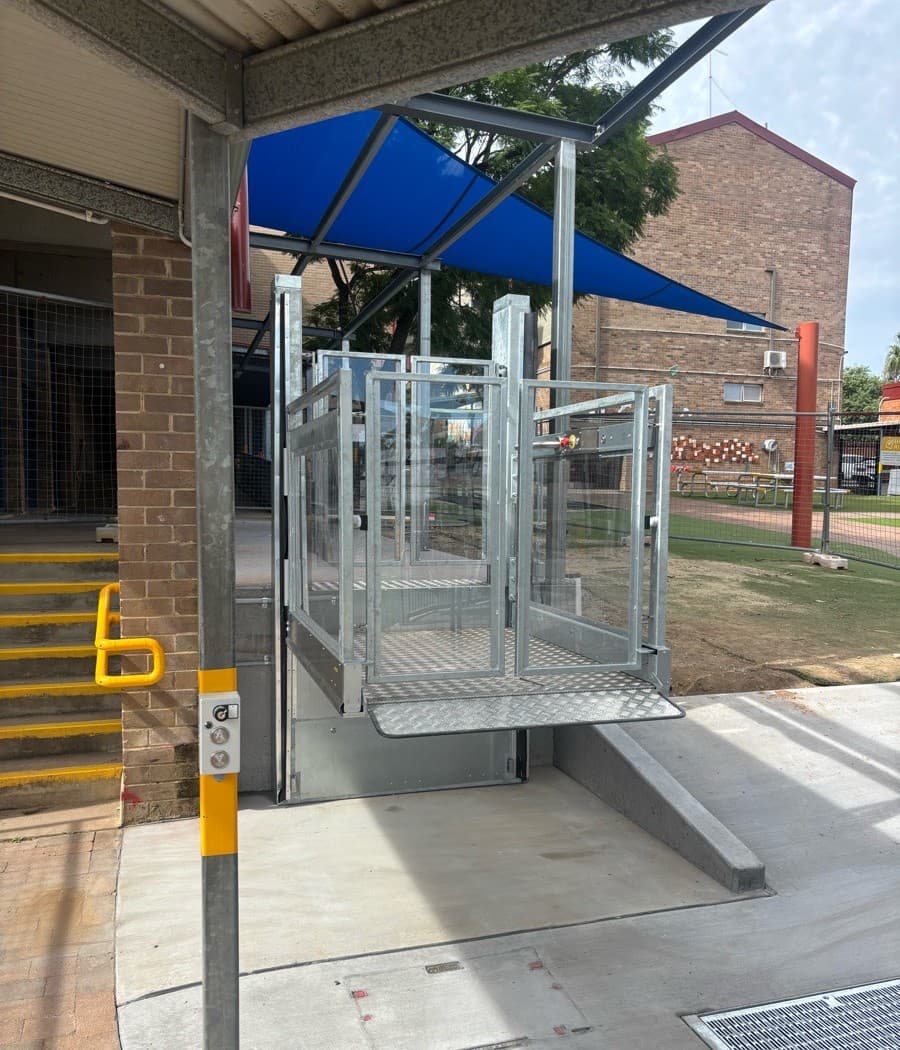
The Discovery is a Swedish-engineered vertical platform lift, from $39,000 ex GST installed. It travels from 500 to 2000 mm, carries up to 400 kg at 0.08 m/s, and complies with AS1735 parts 16 and 18, meeting NCC and DDA requirements. It runs on single phase 16 A power and suits indoor and outdoor sites, with left or right swing, through-car or adjacent-entry doors. It needs only a 50 mm pit for flush entry, or a ramp can be supplied instead. Delivery is from eight weeks and installation takes as little as one day. Safety features include manual lowering, an in-car emergency telephone, a safety underpan and optional backup lowering. There's also a Discovery residential version for homes.
Outdoor and external platform lift prices
The Discovery and the Low Up are both suited to outdoor sites, at the same starting prices as indoors: Low Up from $16,000 ex GST and Discovery from $39,000 ex GST, installed. The Discovery is built for indoor and outdoor use, which is why it often replaces a long ramp at a verandah, landing or school entry. What usually adds to an outdoor wheelchair lift cost is the site rather than the lift: a level slab or footing, drainage around the base, and weather and coastal protection.
What affects the platform lift price?
Two lifts of the same model can land at quite different figures. These are the things that move a disabled lift cost up or down for platform lifts for wheelchairs, roughly in order of impact.
- Travel height. This is the biggest factor. A rise of up to 500 mm on the Low Up costs far less than a 2000 mm rise on the Discovery, because a taller lift needs a bigger structure, more enclosure and more safety equipment.
- Indoor or outdoor. Outdoor wheelchair lift cost runs higher: the lift needs weather protection, drainage around the base and finishes that resist corrosion. Coastal sites in South East Queensland and NSW often call for upgraded materials.
- Site works. Slab or footing preparation, a shallow pit (50 mm for the Discovery), ramps, landing changes, handrails and making good afterwards. A level, solid base costs least.
- Power. The Low Up needs a 230 V, 10 A supply near the lift and the Discovery a single phase 16 A supply. If there's no circuit there, allow for an electrician. The Mobilift is cranked by hand and needs no power.
- Finishes and options. Enclosure panels, glazing, door types and entry configuration, colours, and extras such as battery backup lowering on the Discovery.
- Compliance and approvals. Commercial and public buildings must meet NCC and DDA access requirements, and some projects need certifier sign-off or council approval. A lift already built to the standard, like the Discovery (AS1735 parts 16 and 18), makes this simpler.
- Installation and access. Our starting prices include installation. Tight access, crane or carry-in needs, regional travel and work outside business hours can add to it. The Low Up installs within a few hours and the Discovery in as little as one day.
- Servicing and warranty. Allow for servicing every 6 to 12 months for the Discovery and every 12 months for the Low Up, which keeps the 3-year conditional parts-and-labour warranty valid. Replacement parts are stocked locally.
Platform lift vs ramp vs home lift: which costs less?
- Ramp. Often cheaper to build, but it takes up far more ground than a lift. On many sites there isn't room, or the build cost catches up with a lift.
- Wheelchair platform lift. A small footprint, quick to install and usually the best value for rises up to 2 m.
- Home or commercial lift. Needed to reach a full floor level. It costs more, but serves every storey.
Can NDIS help pay for a wheelchair platform lift?
Possibly. An NDIS wheelchair lift can be funded as a home modification when it's reasonable and necessary for a participant's goals. Usually that means an occupational therapist's assessment and report, quotes, and NDIA approval. Funding depends on your plan and your circumstances; there's no fixed amount.
Aussie Lifts is a registered NDIS provider, and we can supply quotes and technical information for your OT and plan manager. Learn about NDIS lift funding.
How to get an accurate quote.
- Measure the rise, from ground or floor level to the landing.
- Note where the lift would go (inside or outside) and whether power is nearby.
- Send photos or plans. We can quote from plans.
- Book a free site assessment. These are available in Brisbane, the Gold Coast, the Sunshine Coast and Sydney/NSW. Outside those areas, we can quote from your plans and photos.
You can also see lifts running at our showrooms in Brisbane, Sydney and Melbourne.